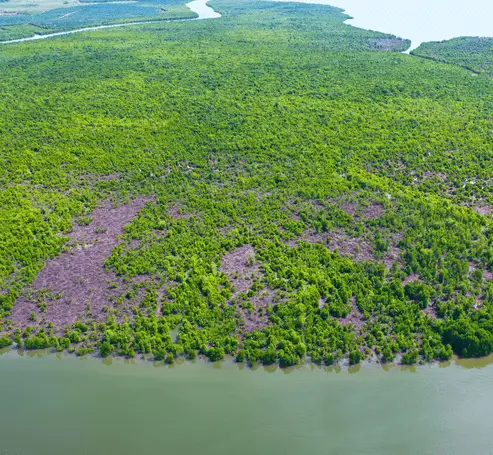
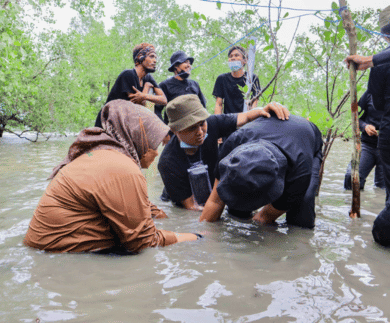
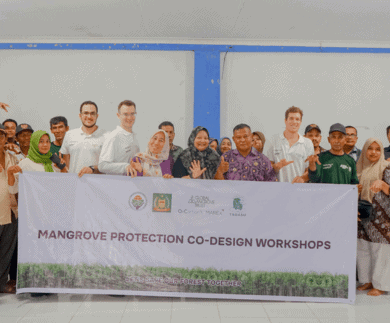
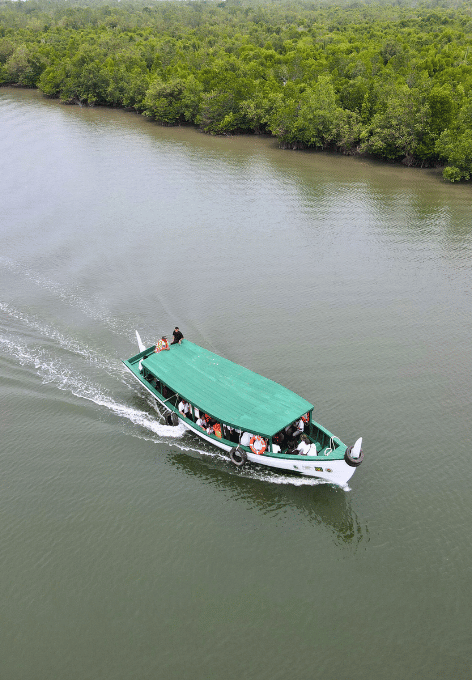

GMT Blue Carbon Corridor is our flagship blue carbon initiative in North Sumatra, designed to conserve, restore, and sustainably manage mangrove ecosystems at scale. The core purpose of the project is the effective conservation of one of the last remaining contiguous mangrove ecosystems in North Sumatra, a region of intensive degradation and deforestation of coastal forests over the last decade. Developed as a multi-phase programme, the corridor approach enables long-term ecosystem protection while delivering measurable climate, biodiversity, and community benefits.
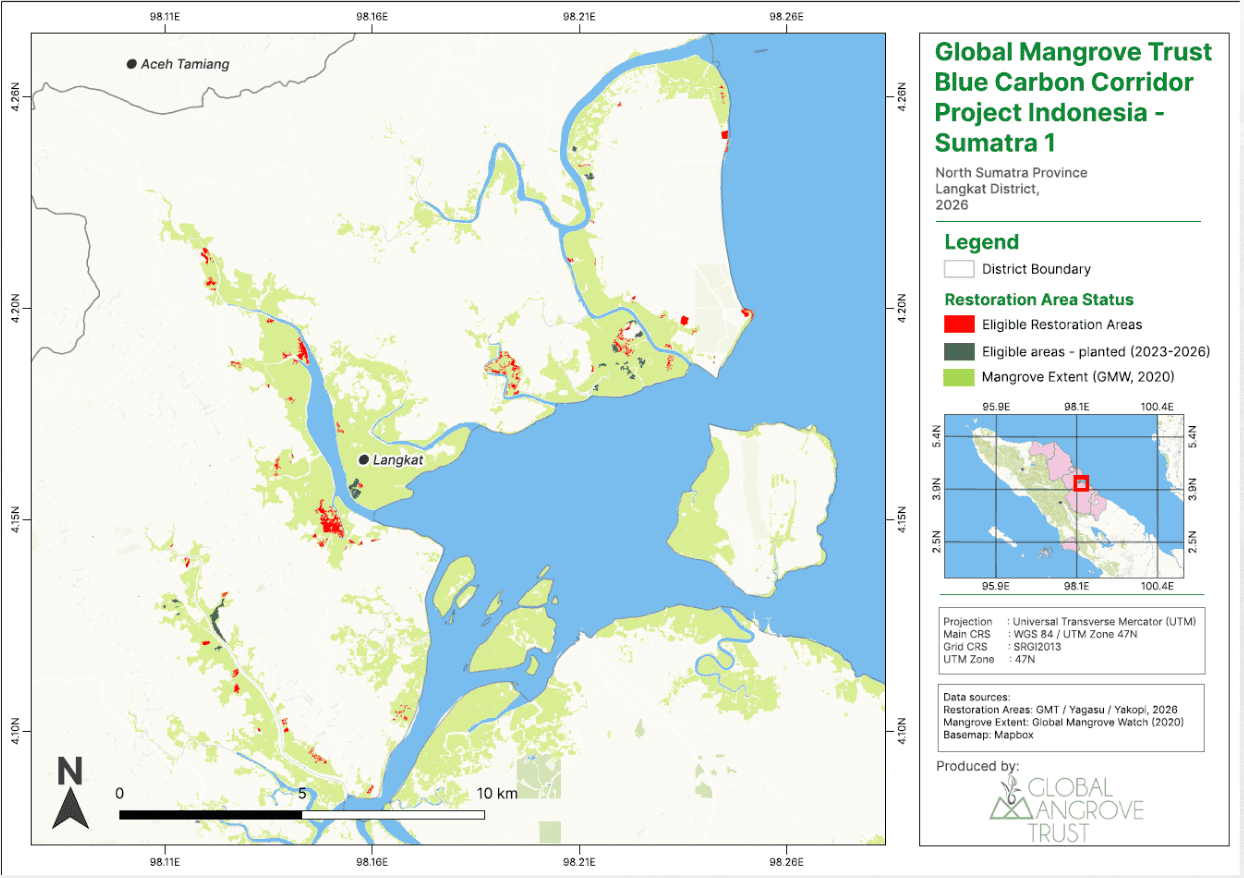
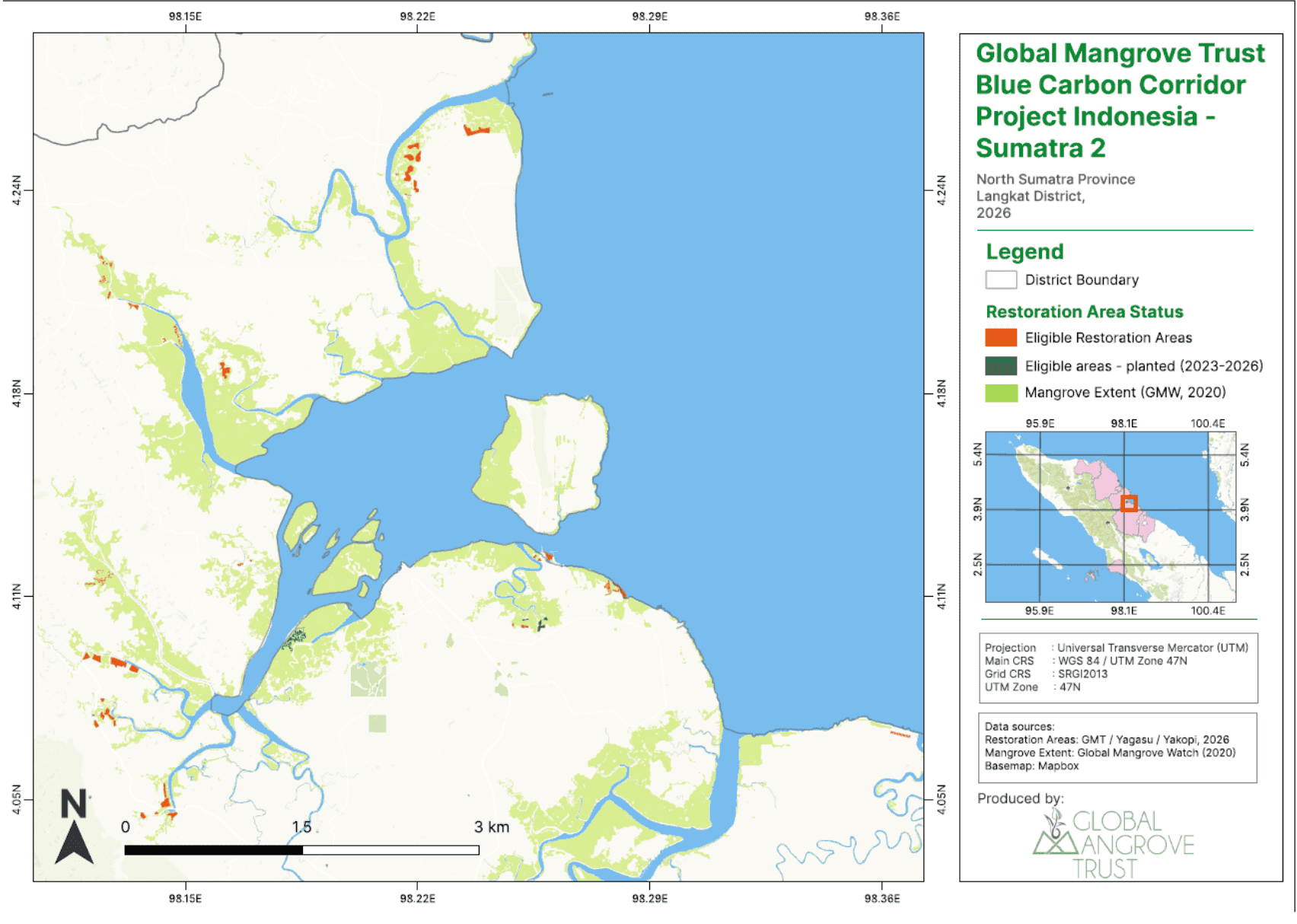
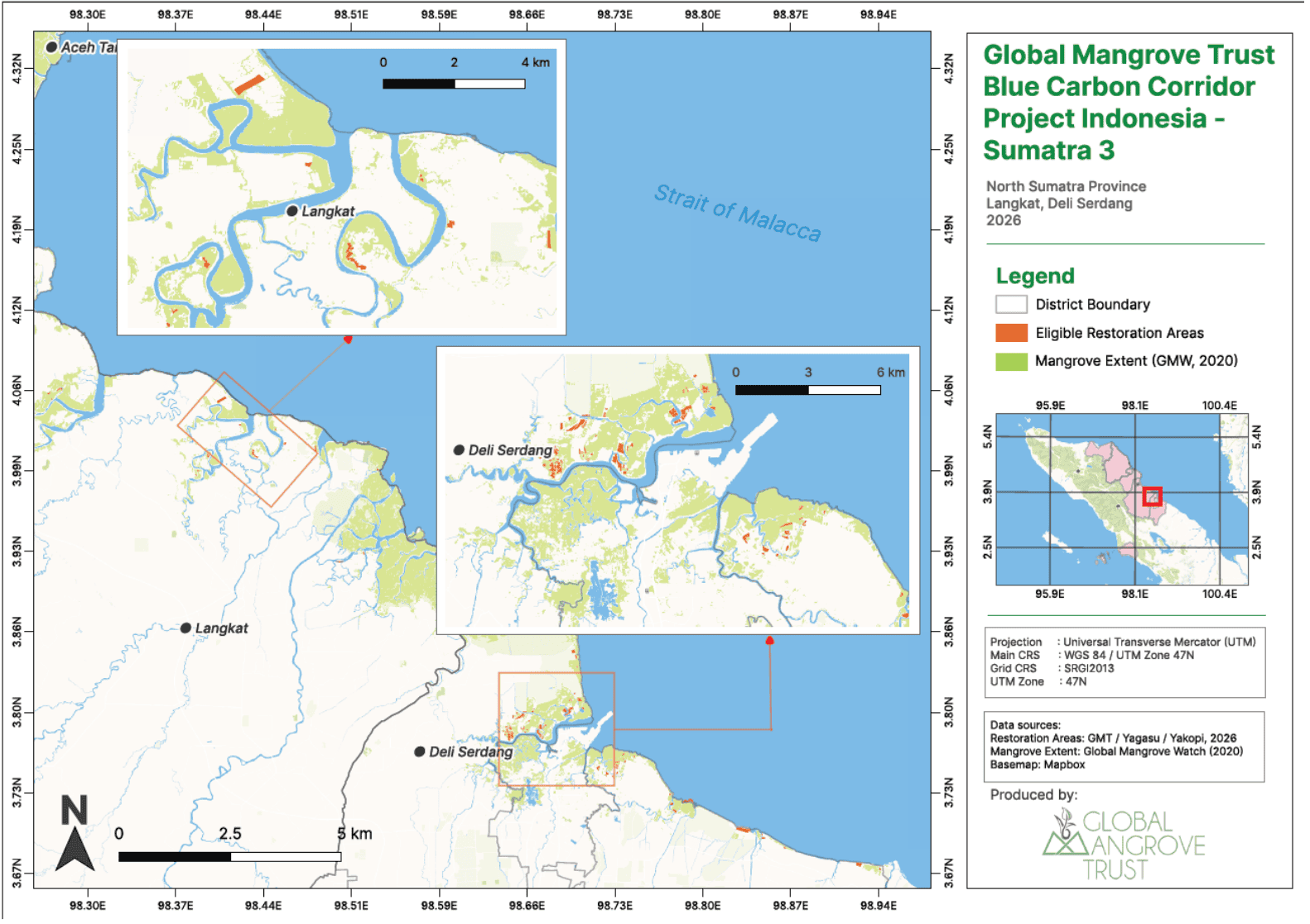
Launched in 2021 in Langkat Regency (Sumatra 1), the initiative expanded within Langkat in 2024 (2024), and will extend further into Deli Serdang regency in 2026.
The project follows a dual-certification pathway: Conservation areas are registered under the OxCarbon Standard and assessed using the KACSAT methodology, whilst restoration areas will be registered under the Gold Standard for Global Goals applying the Methodology for sustainable management of mangroves.
| Village | Project Area (ha) |
| Salahaji | 255.50 |
| Halaban | 247.52 |
| Pulau Kampai | 1,001.37 |
| Pangkalan Siata | 801.21 |
| Total | 2305.6 |
| Village | Project Area (ha) |
| Teluk Meku | 84.25 |
| Tanjung Pasir | 115.87 |
| Seir Meran | 620.48 |
| Pulau Semblian | 391.67 |
| Perlis | 337.37 |
| Total | 1550 |
| Village | Project Area (ha) |
| Paluh Kurau | 1277.63 |
| Percut Sei Tuan | 219.72 |
| Tanjung Rejo | 557.11 |
| Total | 2054.48 |
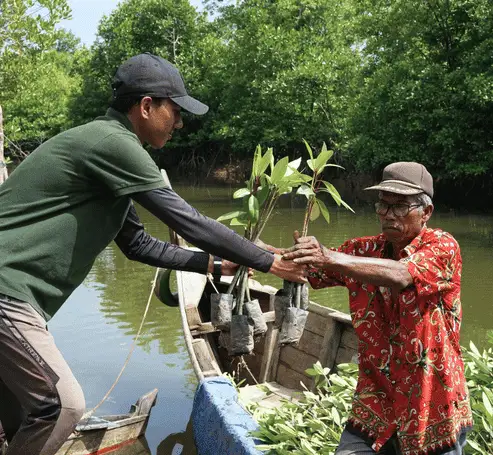
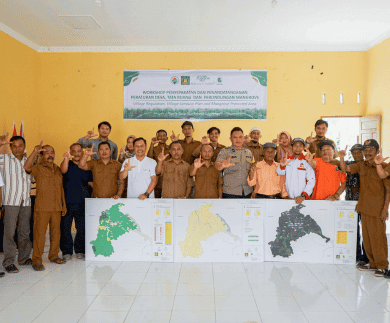
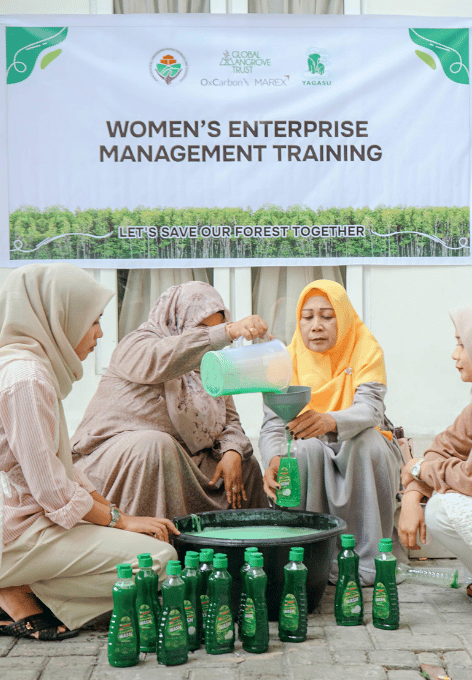
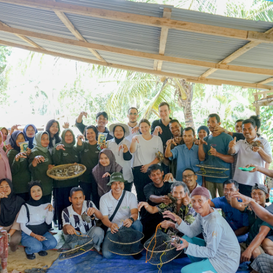
The project is built around four core components that strengthen local governance and reduce deforestation pressure. It reinforces community institutions through agreements, land-use planning, and policy alignment, while enabling active conservation through on-ground monitoring and protection. At the same time, it restores degraded mangrove ecosystems through targeted planting and performance tracking, ensuring long-term ecological resilience. Livelihoods are strengthened through enterprise training for women’s cooperatives, support for silvofishery systems, and improved market access, with artisanal fisheries programmes providing inter-harvest upskilling and value-added production to enhance incomes while reducing pressure on mangrove ecosystems.
Mangrove forestry conservation provides local communities with long and stable jobs
Mangroves support reappearance of game for subsistence hunting and lower the salinity of coastal waters which increases local fish stocks.
The project commits to providing training to communities by skilled forest instructors and biologists
Women form a majority of the workforce at Yagasu and are a driving force behind the nurseries
People working at the nurseries and forest rangers are well paid, supporting local economic development
By supporting regeneration in rural areas, we reduce inequalities and create economic opportunities outside richer urbanised regions
Well-maintained mangrove forests, cultivation of aquaculture, fishing, and honey, support sustainable communities.
Fair co-benefit agreements are in place with the communities to ensure they reap financial rewards
001-OxC seeks a transition from climate impacts via avoided deforestation to active removals over its project lifetime
Mangrove roots filter pollution from the seas and present an ideal location for sea-life to reproduce and thrive
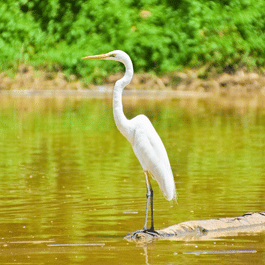
The entire food chain is present in well-kept mangrove forests, from plant eaters to smaller / larger predators, and varied bird life
We obtained all permissions from governing bodies, including SRN registration, to conduct forest conservation activities
For individual philanthropic donations for 001-OxC, visit our sister site at Handprint Tech.
For enterprise sales via Marex Asia, collaborations, or to learn more about our work on the ground, fill in the form below and we’ll be in touch!
Copyright © 2025 All Rights Reserved.
OxCarbon is a not-for-profit company, limited by guarantee, established in 2021 and spun-out by Oxford University Innovation. It seeks to promote innovation in climate impact projects that align with the Oxford Offsetting Principles.