Scaling high-integrity blue carbon projects requires more than strong science and community partnerships, it also depends on transparent market infrastructure, clear regulatory frameworks, and collaboration across government, project developers, investors, and local partners.
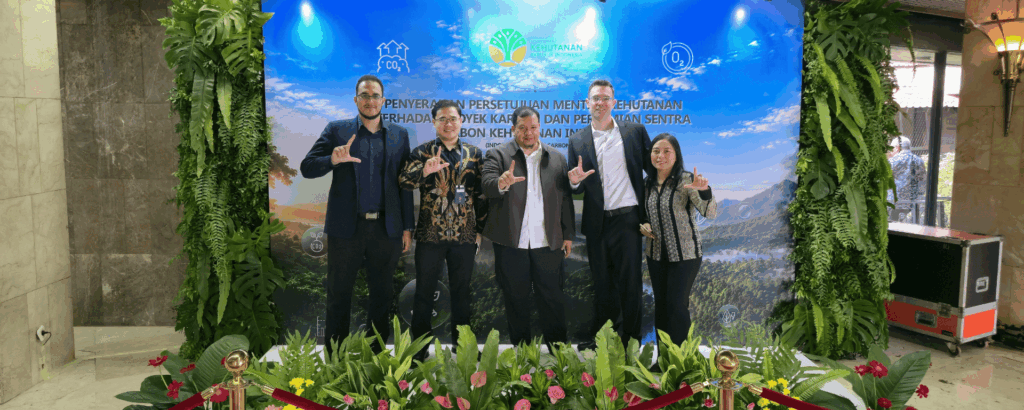
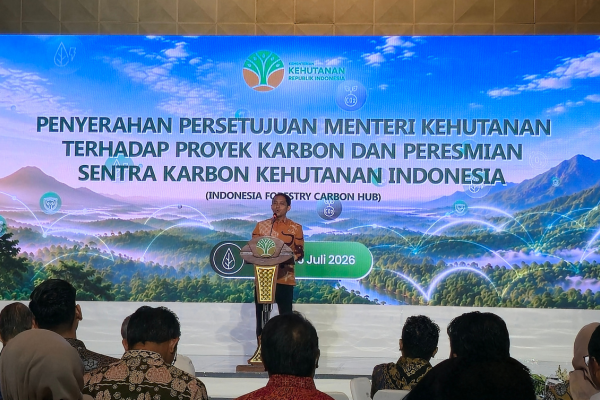
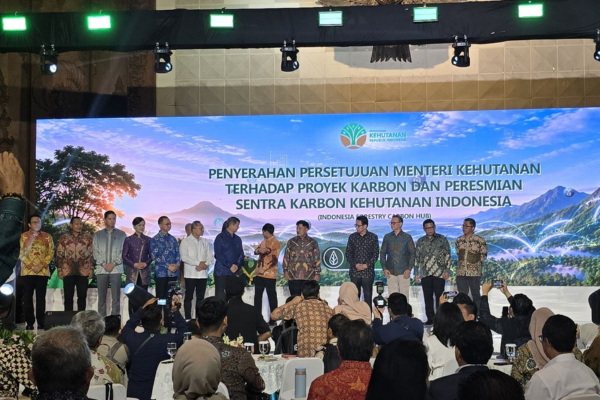
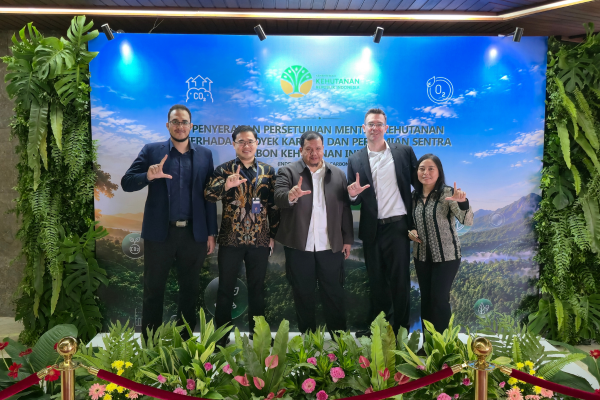
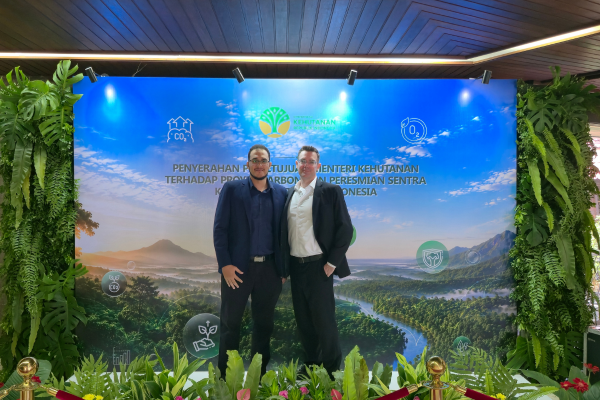
Last week, we attended the Handover of the Ministry of Forestry’s Approval for Carbon Projects and the Inauguration of the Indonesia Forestry Carbon Hub, hosted by Indonesia’s Ministry of Forestry. Our Executive Secretary, Ryan Merrill PhD, and Lead Impact Analyst, Mohamed Abdelwareth PhD, attended the event alongside our partner Yagasu (Yayasan Gajah Sumatra).
It was also a pleasure to reconnect with ilham CMMAI, Director of Forest Utilization Business Development at Indonesia’s Ministry of Forestry, following our webinar where we explored Indonesia’s evolving carbon market and opportunities to accelerate investment in high-integrity climate projects.
The event marked an important milestone in the continued development of Indonesia’s forest and blue carbon markets, bringing together government leaders, project developers, investors, and ecosystem partners to strengthen the country’s carbon market infrastructure.
A key highlight was the launch of the Indonesia Forestry Carbon Hub, which will integrate the Verra Registry, SRUK, and the Indonesia Stock Exchange (IDX) through API-enabled and blockchain-supported infrastructure. This represents an important step towards improving transparency, traceability, and market confidence for high-integrity carbon projects.
The Ministry also announced the first approvals for verified pilot carbon projects, covering approximately 225,000 hectares, with an estimated emissions reduction potential of 30 million tonnes of CO₂e, an economic transaction value of around Rp5 trillion, and potential Non-Tax State Revenue (PNBP) of approximately Rp500 billion.
For us, these developments reinforce an important principle: delivering durable climate impact requires an ecosystem where policy, finance, science, and local implementation evolve together. Through our Blue Carbon Corridor programme in Indonesia, we are working alongside government, local partners, investors, and coastal communities to help build that ecosystem developing high-integrity blue carbon projects that restore mangrove forests, generate measurable climate outcomes, and support sustainable livelihoods.
We congratulate the Ministry of Forestry and all partners involved on this important milestone and look forward to contributing to the continued growth of Indonesia’s blue carbon ecosystem.