CASE STUDY
When survival depends on the forest
Mangrove logging is often described as a threat to coastal ecosystems. Less often discussed is why it happens. In many remote coastal communities across Indonesia, logging is not driven by choice, but by necessity. For families with limited access to stable income, harvesting mangrove timber, often for charcoal production, can become one of the few available ways to support a household and meet daily needs. For Global Mangrove Trust (GMT), the challenge was not understanding why mangrove logging occurs, but how to address its underlying economic drivers. Through its Blue Carbon Corridor programme, GMT works with communities to develop practical livelihood alternatives that reduce dependence on mangrove timber extraction while strengthening local economies and supporting long-term mangrove conservation.
Supporting the transition to sustainable fishing
The programme was shaped through an adaptive management process and continuous engagement with local communities. During co-design workshops conducted in 2024, community members consistently described mangrove logging as a livelihood of necessity rather than choice, expressing a strong interest in returning to fishing if viable opportunities and support were available. These consultations helped inform the programme’s design and contributed to strong community participation as the initiative expanded.
GMT worked with local implementation partner YAGASU to support former mangrove loggers in transitioning into artisanal fishing and mud crab aquaculture. This work seeks to address one of the underlying economic drivers of mangrove degradation: limited economic opportunity.
The initiative was built around a simple principle: if communities have access to viable and profitable alternatives, pressure on mangrove forests can be reduced, and local economies become more resilient.
Beginning in 2025, GMT and YAGASU supported participating households to establish and expand small-scale fishing and mud crab enterprises. Support included subsidised fishing equipment, aquaculture materials, technical training, business mentoring, and ongoing field assistance. The programme strengthens market access by linking producers with buyers and supporting local value chains with Halal recipes to improve the commercial viability of end products. The programme was made possible through financial support from Marex, with expansion across 12 villages supported by the UBS Optimus Climate Collective.
Over the first 18 months of the programme (Q1 2025–Q2 2026), GMT progressively enrolled 126 former mangrove loggers across 4 villages: Pangkalan Siata, Pulau Kampai, Halaban, and Salahaji, to transition into sustainable fishing and mud crab aquaculture. By Q4 2025, all participating former loggers had signed programme agreements committing to transition away from mangrove timber extraction through sustainable fishing and mud crab aquaculture. In parallel, 42 women participated through community cooperatives, receiving capital goods and seed grants to establish value-added fish processing enterprises, creating additional household income opportunities and strengthening local fisheries value chains.
Qualitative monitoring and participant feedback collected between Q4 2025 and Q2 2026 indicate that many participating households experienced increased income after transitioning from mangrove timber extraction to silvofisheries. Pilot monitoring recorded average participant sales of IDR 4.28 million across the initial cohort of 65 participants in Q4 2025. By Q1 2026, average participant sales for the baseline cohorts had increased to IDR 5.39 million. One of the strongest programme-level growth signals was observed in Pulau Kampai, where average participant sales nearly doubled from IDR 2.67 million to IDR 5.25 million between Q4 2025 and Q1 2026 across approximately 30 participants.
Beyond supporting existing fishing activities, the programme is also exploring community-led innovations to strengthen local value chains. Working with YAGASU, GMT is supporting the development of a pilot community-based mud crab hatchery in North Sumatra, designed to reduce dependence on external crab seed suppliers while creating new locally owned revenue opportunities. If successful, the approach could improve seed availability, strengthen production systems, and increase the long-term resilience of community aquaculture enterprises.
The programme is supported by a community-based monitoring system that records participant sales, product categories, and production data. Transactions are documented within participating villages and cross-verified through YAGASU field monitoring, KoboToolbox reporting, and recurring GMT field reviews, providing a transparent evidence base for tracking programme performance over time.
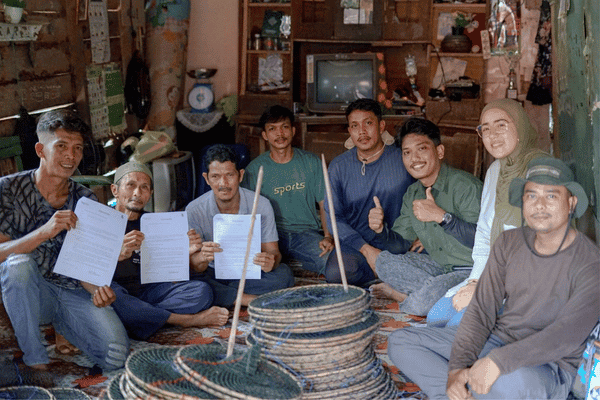
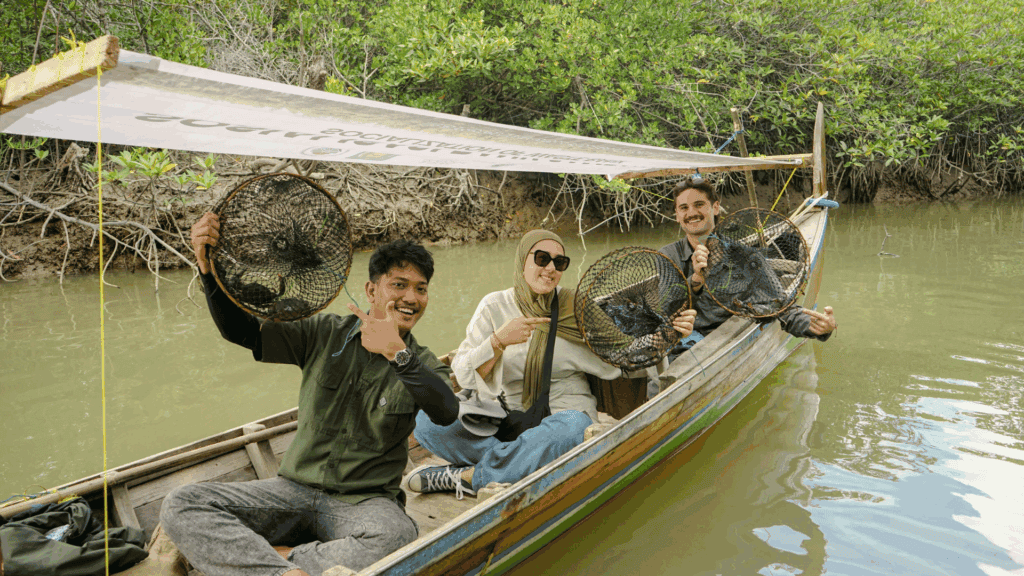
Figure 1. Programme participants signing participation agreements and receiving crab traps

Figure 2. Community members receiving fishing and aquaculture equipment through GMT’s Gearbank programme
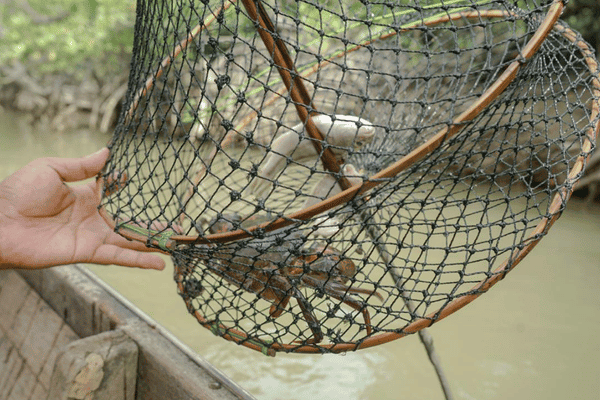
Figure 3. Freshly harvested mud crabs from the community aquaculture programme
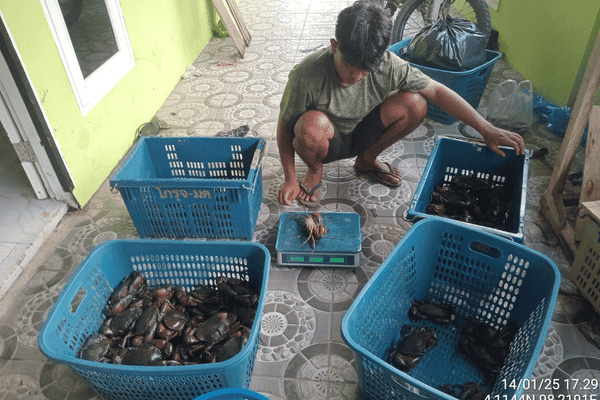
Figure 4. Harvested mud crabs being weighed and graded for market.
A different future for Mangrove Communities
The initiative has also created wider economic benefits within participating communities. As fishing and aquaculture production increased, new opportunities emerged for local processing, marketing, and small business development, helping strengthen local economies while distributing benefits across households and community groups.
Importantly, the programme demonstrates that livelihood enhancement can serve as a practical conservation strategy. Rather than relying solely on restricting harmful activities, the approach addresses one of the underlying drivers of mangrove degradation by reducing dependence on mangrove timber extraction through profitable livelihoods linked to healthy mangrove ecosystems. Healthy mangroves support productive fisheries, protect coastlines, store carbon, and sustain local livelihoods, creating shared incentives for long-term conservation.
The experience in North Sumatra demonstrates that protecting mangrove forests is not only about restoring ecosystems it is also about investing in people. By supporting former mangrove loggers to transition into sustainable fishing economies, while strengthening local fisheries value chains, GMT and YAGASU are helping build more resilient coastal communities and stronger foundations for the long-term stewardship of Indonesia’s mangrove forests.