
How Villages in North Sumatra Confront Logging, Palm Oil, and Waste Challenges
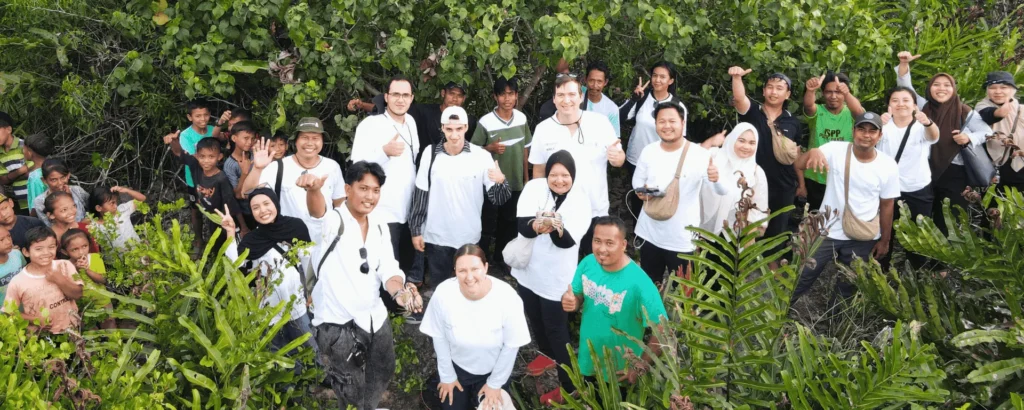
Effective conservation starts with listening. In North Sumatra, each village faces different pressures on its mangroves whether from local logging, corporate palm oil expansion, or waste accumulation. What unites them is their determination to defend both ecosystems and livelihoods. By engaging directly with communities and listening to their concerns, the project is able to design activities that respond to real challenges on the ground, rather than imposing one-size-fits-all solutions. With Yagasu’s support, communities are tackling threats head-on through strategies that combine ecological protection with social empowerment.
Pangkalan Siata: Seeking Alternatives to Logging
Pangkalan Siata is among the most remote villages in the project area. Its isolation has made families heavily dependent on logging and charcoal kilns. But community members were clear: they do not want to log. The work is physically grueling, dangerous, and poorly paid. What holds them back from change is not willingness but resources. Sustainable crabbing could replace logging as a primary income, but households require 40–50 traps to generate enough income. Most currently own fewer than 10.
Through GearBank, with Yagasu’s support, households are receiving both the materials and the knowledge needed to transition. Community members are trained to build their own traps using bamboo provided by Yagasu, ensuring they can scale up their efforts without relying on external suppliers. Alongside this, they are also educated in sustainable crab aquaculture practices designed to provide consistent income across tidal cycles. A key focus of this training is the importance of crabbing during high tide periods. Crabs caught too early in their growth cycle are relocated to nearby ponds, where they can reach full size. Once matured, they are sold during low tide periods when supply is scarce and prices are significantly higher. This approach not only supports sustainable harvesting but also ensures families can generate reliable income, reducing dependence on logging. Scaling up GearBank remains essential. Without it, many families will remain trapped in the cycle of logging simply to survive.

Teluk Meku: Resisting Palm Oil Encroachment
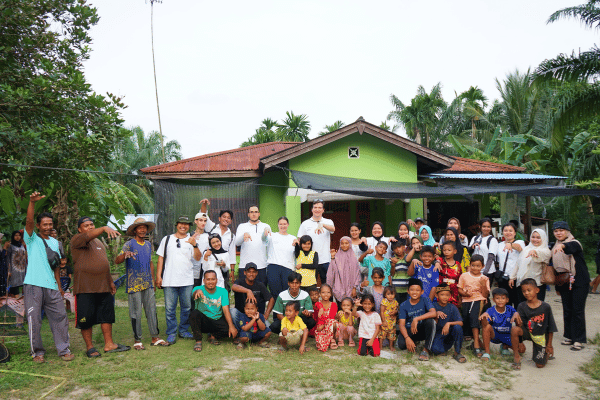
In Teluk Meku, the threat comes from outside. Palm oil companies have tried to clear mangrove land illegally, offering no benefit to the community. With Yagasu’s guidance, villagers created formal maps and passed local regulations to secure their land rights. These steps allow them to push back against corporate encroachment and protect their mangroves. Here, conservation is as much about governance as it is about ecology.
Perlis: Turning Waste into Opportunity
The village of Perlis faces a different challenge: tidal currents deposit large volumes of waste along its shoreline. Instead of letting waste pile up, residents have turned it into economic opportunity. With support from Yagasu, they convert one kilo of waste into three tiles, which sell for 6,000 IDR after production costs. These tiles are already in demand by corporations and local governments for construction projects.
Perlis also benefits from silvofisheries training, which links mangrove protection with sustainable aquaculture. By aligning local practices with ecological needs, the village is reinforcing the connection between healthy forests, productive fisheries, and financial success.
Looking Ahead
These villages show that there is no single recipe for mangrove protection. Each community is charting its own path whether through alternative livelihoods, stronger governance, or creative reuse of waste. What makes this work effective is the process: conservation strategies are built not by telling communities what to do and then leaving, but by listening, co-designing, and empowering people from the earliest planning stages.
