
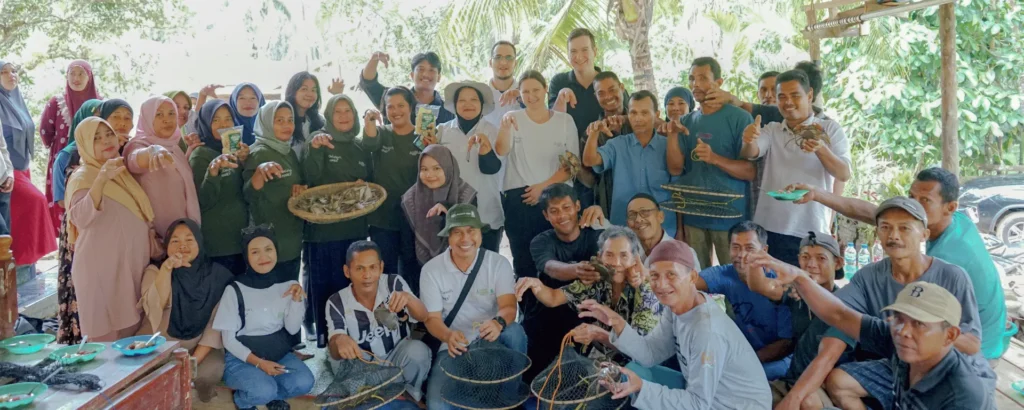
During our recent visit to Medan with the OxCarbon and Marex team, we saw how communities are turning mangrove conservation into new livelihood opportunities. Women-led enterprises are growing, and the Gearbank program is helping families adopt sustainable silvofisheries providing real alternatives to logging. Much of this progress is possible thanks to our local partner Yagasu, who has been steadily supporting communities with training, coordination, and the resources needed to sustain these activities.
Pulau Kampai: From Mangrove Fruit to Cookies
In Pulau Kampai, women have transformed mangrove fruit once overlooked into a small business. With training in food processing, packaging, and marketing, they now produce profiteroles for local sale.
What makes this initiative stand out is ownership. The women manage production, profits, and decision-making. As one participant joked:
“Now we don’t have to ask our husbands for money—we can buy what we need ourselves, even a little lipstick if we feel like it.”
It may sound light, but it represents a profound shift. Women are no longer excluded from income generation; they are now active contributors to household finances, able to make personal and family decisions with greater autonomy.
Expanding Gearbanks for Men
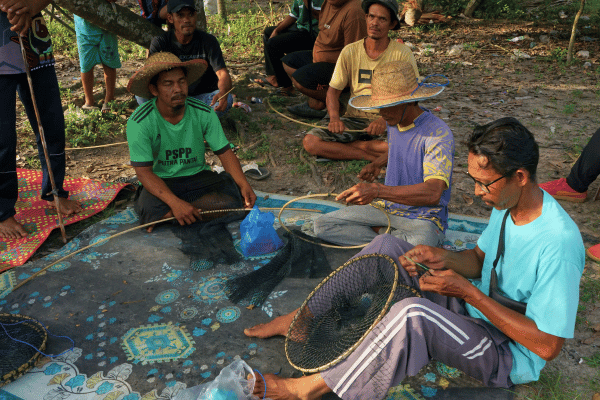
At the same time, men in Pulau Kampai and other villages are taking up sustainable crabbing. Over 100 men have been trained to build crab traps from bamboo, with more than 500 traps already produced.
This gives families a safer and more stable option than logging, which has long been the default despite its risks and low returns. By connecting traditional skills to sustainable enterprises, GearBank supports dignified work while keeping mangroves intact.
Tanjung Pasir, Halaban, and Perilis: Soap, Chips, and Dim Sum
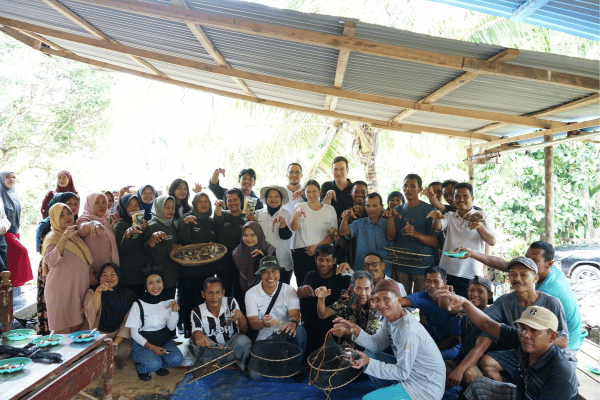
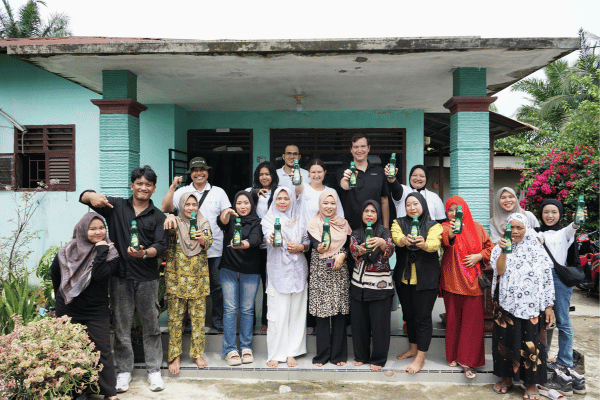
Elsewhere, women’s groups are showing creativity with mangrove-based products. In Tanjung Pasir, they produce about 100 bottles of mangrove soap each month and are experimenting with laundry detergent. In Halaban, women are making mangrove chips and dim sum, adding variety to local food businesses.
In Perilis, women observed that there was higher demand in the village for soap in smaller-sized containers at a lower price point. YAGASU supported the group in securing additional packaging options, but it was the women themselves who carried out the customer research. This is a powerful example of their ingenuity using entrepreneurship and creative problem-solving to meet market demand and increase sales of their products.
Shifting Household Dynamics
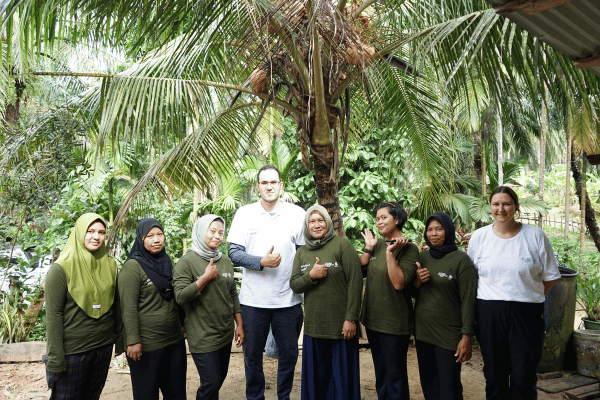
Across the villages, women’s enterprises are reshaping family roles. Women who once depended on their husbands now earn their own income, easing household financial pressures and giving them a stronger voice at home. For men, Gearbank is opening safer, more reliable livelihood pathways. Together, these changes are turning conservation into a shared opportunity.
Looking Ahead
The expansion of women’s enterprises and the Gearbank project demonstrates a powerful model: when conservation is tied to livelihoods, families embrace it. Scaling up these programs through investment, training, and continued support will be key to securing the long-term protection of North Sumatra’s mangroves. Mangroves are no longer seen only as forests for cutting. They are now soap, food, profit, and empowerment. They are the roots of new futures.
